
Why Wadi Rum Looks Like Mars: The Story Behind Jordan's Red Desert
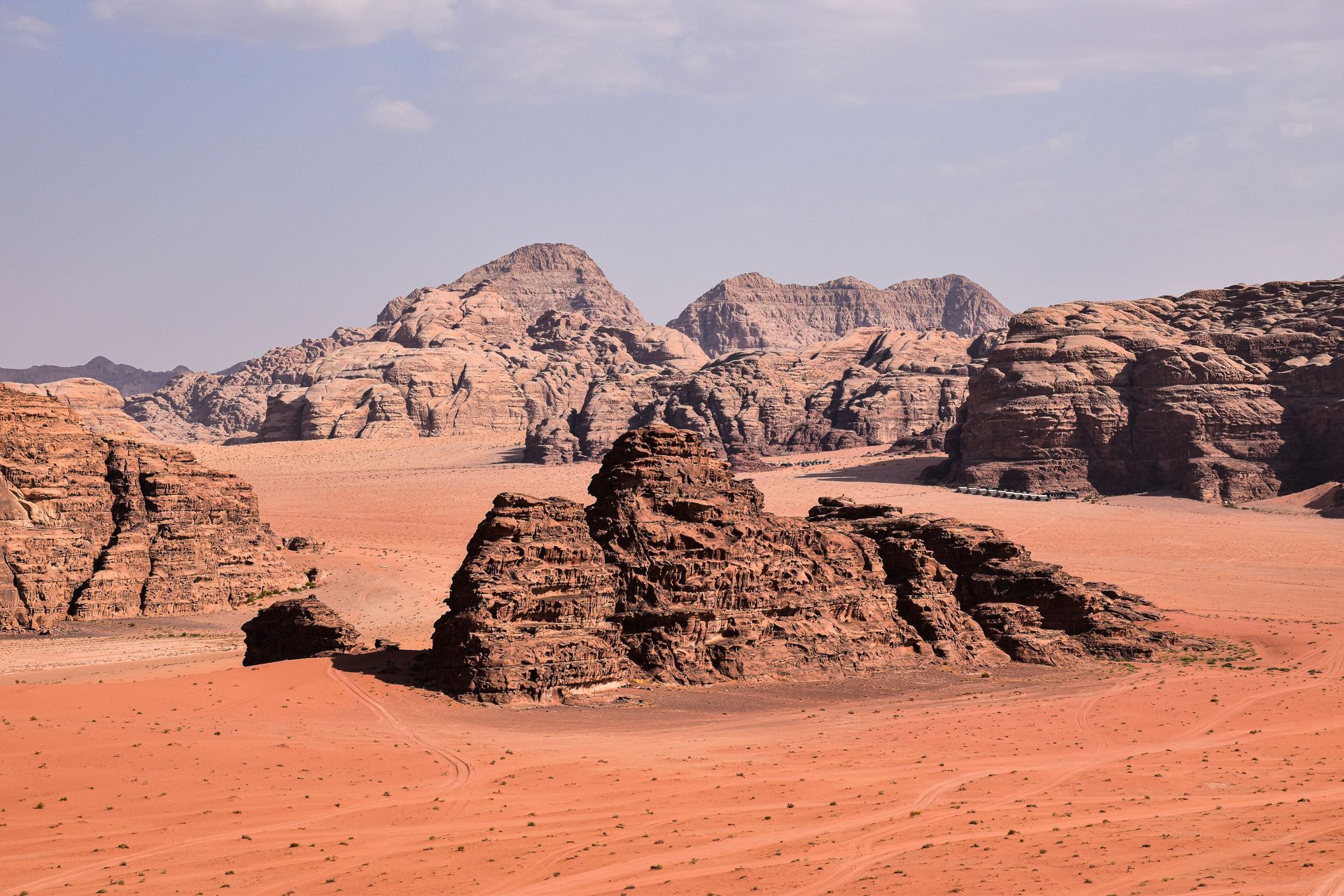
The first time you step into Wadi Rum, it's easy to understand why so many visitors describe it as another planet. Towering sandstone mountains rise dramatically from endless red sand, while vast open valleys stretch toward the horizon without a single building in sight. The landscape feels untouched, peaceful, and almost surreal.
This extraordinary scenery has earned Wadi Rum the nickname "The Valley of the Moon," but many travelers know it by another comparison—it looks remarkably like Mars.
So, what makes Wadi Rum resemble the Red Planet? The answer lies in millions of years of geological history, unique desert landscapes, and a beauty so striking that filmmakers have repeatedly chosen it to represent worlds beyond Earth.
A Desert Unlike Any Other
Unlike many deserts that are covered mainly in flat sand dunes, Wadi Rum is a spectacular combination of:
- Towering sandstone mountains
- Massive granite formations
- Deep valleys
- Red and orange sand dunes
- Narrow canyons
- Natural rock bridges
- Vast open plains
Together, these features create a landscape unlike anywhere else in Jordan—and one that closely resembles how many people imagine Mars.
Why Is the Sand So Red?
One of the first things visitors notice is the vibrant color of the desert.
The deep shades of red, orange, and gold come from iron oxide, a naturally occurring mineral found in the sandstone. Over millions of years, the rocks have weathered and broken down into fine sand, giving Wadi Rum its distinctive appearance.
As the sun moves across the sky, these colors constantly change. At sunrise, the sand glows with soft golden tones. By midday, the landscape becomes a brilliant red, while sunset paints the mountains in rich shades of orange and crimson.
This ever-changing palette is one of the reasons photographers and nature lovers are drawn to Wadi Rum throughout the year.
Millions of Years in the Making
The dramatic landscape of Wadi Rum was not formed overnight.
For millions of years, wind, rain, and changing temperatures slowly carved the sandstone and granite into the shapes we see today. This natural process created:
- Towering cliffs
- Natural arches
- Mushroom-shaped rocks
- Deep canyons
- Smooth valleys
- Isolated mountains rising from the desert floor
Every rock formation tells part of the desert's geological story, making Wadi Rum one of the most fascinating natural landscapes in the Middle East.
The Silence That Feels Out of This World
One of the most surprising experiences in Wadi Rum isn't something you see—it's something you hear.
Nothing.
Away from busy roads and city life, the desert offers a rare sense of complete silence. Standing among the mountains, you'll hear only the gentle breeze moving across the sand.
This peaceful atmosphere adds to the feeling that you've stepped onto another planet.
Many visitors say the silence becomes one of the most memorable parts of their journey.